
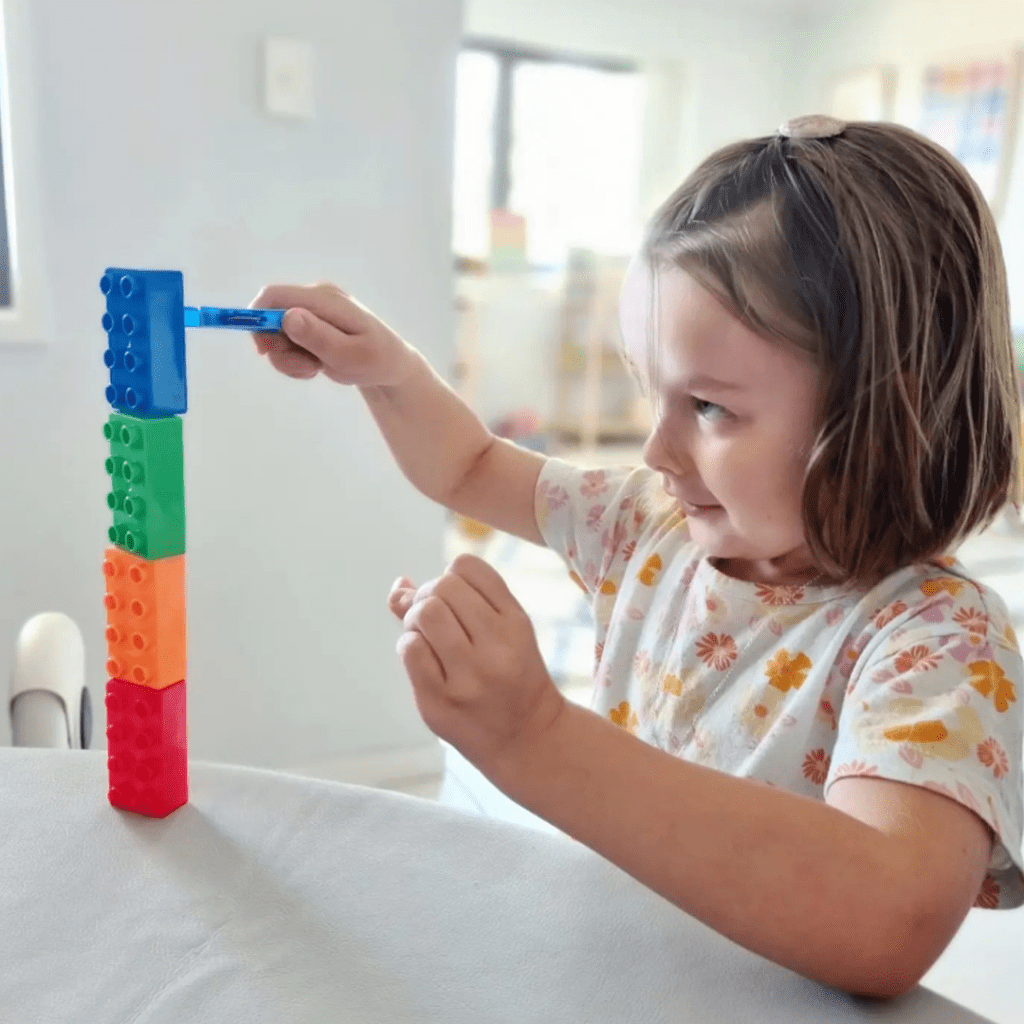
Problem-solving is one of the most powerful skills a child can develop. From navigating playground disagreements to figuring out why a structure collapsed, children are constantly encountering challenges that shape how they think and respond.
When children learn to approach problems calmly and creatively, they build confidence, resilience, and independence. The earlier these skills are nurtured, the stronger their foundation becomes — not only academically, but socially and emotionally too.
The good news? Problem-solving doesn’t require worksheets or pressure. It grows naturally through hands-on, playful learning experiences, especially when supported by structured tools like the Six Bricks Method.
What Are Problem-Solving Skills?
Problem-solving skills are the thinking tools children use to:
- recognise a challenge
- analyse what’s happening
- consider possible solutions
- choose a response
- reflect on the outcome
Whether a child is rebuilding a fallen tower, negotiating a turn, or adapting when plans change, they are strengthening the mental muscles needed for life. Problem solving is not about getting everything right — it’s about learning how to think.
Why Problem-Solving Skills Matter in Early Childhood
Problem-solving is deeply connected to many areas of development:
Cognitive Development
Children practise:
- critical thinking
- pattern recognition
- logical reasoning
- memory and sequencing
Emotional Growth
As children navigate frustration or disappointment, they learn to:
- regulate emotions
- persist through challenges
- develop resilience
Social Skills
Problem-solving strengthens:
- communication
- compromise
- collaboration
- empathy
Creativity
Open-ended challenges encourage children to experiment, test ideas, and invent solutions. Play-based problem solving strengthens all these skills at once — without pressure.
The Six Bricks Problem-Solving Process
Children don’t need complicated frameworks. A simple, repeatable structure works best. Here’s a child-friendly problem-solving pathway that can be integrated into Six Bricks activities:
- Step 1: Spot the Challenge – “What’s not working?” (Example: My structure keeps falling.)
- Step 2: Explore the Situation – “What might be causing it?” (Is the base too small? Are pieces uneven?)
- Step 3: Think of Ideas – “What else could I try?” (Wider base? Different stacking order? Fewer bricks?)
- Step 4: Choose and Try – Select one idea and test it.
- Step 5: Reflect – Did it work? What could I change next time?
This playful cycle teaches children that mistakes are part of learning.
Problem-Solving Development by Age
Toddlers (2–3 Years)
At this stage, problem solving happens through movement and exploration.
- Trial and error (trying different ways to stack bricks)
- Physical experimentation (pushing, pulling, balancing)
- Beginning language to ask for help
Six Bricks Example: Encourage toddlers to stack bricks freely and explore what makes them fall or stay upright.
Preschoolers (4–5 Years)
Children begin understanding cause and effect.
- Simple puzzle solving
- Sharing and turn-taking
- Pretend play with story sequences
Six Bricks Example: Challenge them to build a pattern and explain what comes next.
Early Primary (6–8 Years)
Logical thinking strengthens.
- Understanding fairness and rules
- Working collaboratively
- Identifying patterns and systems
Six Bricks Example: Build a structure that must meet two rules (e.g., must include three colours and stand independently).
Older Children (9–12 Years)
Abstract thinking emerges.
- Exploring multiple solutions
- Considering others’ perspectives
- Planning ahead
Six Bricks Example: Design a bridge structure with limited bricks and evaluate improvements.
Teens
Problem solving becomes reflective and strategic.
- Weighing pros and cons
- Long-term thinking
- Self-evaluation
Six Bricks activities can still support executive functioning through timed challenges and rule-based design tasks.

Six Bricks Activities to Strengthen Problem-Solving
1. Rescue the Structure
Build a small structure and gently knock part of it down. Ask the child to rebuild using a different strategy. Skills developed: Adaptability, structural reasoning, emotional resilience.
2. Tallest Tower Challenge
Using only six bricks, build the tallest stable tower possible. Encourage children to test different base designs and reflect on why some towers fall. Skills developed: Hypothesis testing, analytical thinking, patience.
3. Limited Resources Challenge
Provide only six bricks. Ask children to create something meaningful (a house, animal, vehicle). Limitations boost creativity and flexible thinking.
4. Build a Bridge
Create a structure that can hold a small object. Test it. If it collapses, redesign it. Discuss: What made it strong? What made it unstable?
5. The “Move It” Team Challenge
Set a rule-based challenge (e.g., move bricks across the room without using hands). This encourages teamwork, creative strategy, and negotiation.
Why Six Bricks Works So Well for Problem Solving
The Six Bricks Method is powerful because it is:
- Simple
- Structured
- Short in duration
- Repeatable
- Inclusive
The limited number of bricks encourages deeper thinking rather than overwhelming choice. Children focus on strategy rather than quantity. The predictability of routines helps reduce anxiety while increasing engagement — particularly helpful for neurodiverse learners.
Key Takeaways
- Problem-solving is a foundational life skill.
- Play-based learning strengthens cognitive, emotional, and social development.
- A simple step-by-step process builds confidence.
- Limiting materials increases creative thinking.
- Six Bricks provides a structured yet flexible tool for developing problem-solving skills at any age.
Frequently Asked Questions
What age should we start teaching problem-solving skills?
From toddler years. Even simple stacking and trial-and-error activities build foundational thinking.
What if my child gets frustrated easily?
Model calm reflection. Show that mistakes are part of learning. Keep activities short and achievable.
Can Six Bricks be used in classrooms for problem-solving development?
Yes. The method aligns well with curriculum outcomes and supports executive functioning, numeracy, and collaboration.
Is this suitable for neurodiverse learners?
Absolutely. The hands-on and predictable nature of Six Bricks activities supports inclusive participation.
About the Author
Six Bricks Learning supports educators and families in building core developmental skills through structured, play-based methodologies that foster confidence, curiosity, and lifelong learning.
Strengthen Skills Through Play
Ready to strengthen your child’s problem-solving skills through purposeful play? Explore Six Bricks activities and discover how just six bricks can unlock creative thinking, resilience, and confidence.
Explore Six Bricks Activities