

Storytelling Through Play: How Build-a-Book Develops Early Literacy Skills
Picture a Foundation class settling in for story time. One child is already fidgeting. Another has drifted into a daydream before the first page is turned. A third is attentive but quiet. That child is processing — but a pencil-and-paper follow-up simply won’t capture it. This is the everyday reality most early years educators know well: the gap between a child hearing a story and a child truly inhabiting it.
Storytelling through play bridges that gap. When children stop just listening and start building — physically constructing scenes as a narrative unfolds — something powerful happens. Language sticks. Sequences become memorable. Comprehension deepens, almost without effort. For children who learn best through touch, movement, and doing, the story finally belongs to them.
This is the principle at the heart of Six Bricks Build-a-Book. In short, it is a literacy resource that transforms read-aloud time into an active, hands-on, screen-free learning experience. In this blog, we explore why storytelling through play works so well for early literacy development — and how Build-a-Book puts that research into practical classroom action.
Quick Overview
- Who is this for? Early childhood and primary educators, learning support practitioners, and parents of children aged 3–8.
- What will you learn? Why play-based storytelling supports early literacy, and how Build-a-Book delivers it in the classroom.
- Key takeaway: When children build what they hear, they develop stronger language, comprehension, sequencing, and retelling skills — all at once.
Why Storytelling Through Play Supports Early Literacy
Storytelling through play early literacy development is not a new idea. It sits at the intersection of decades of research in cognitive development, language acquisition, and embodied learning. Understanding why it works, however, helps educators and parents make confident, intentional choices about the resources they bring into learning spaces.
When a child listens to a story, they do substantial cognitive work. Specifically, they hold characters and events in working memory, track sequence and cause-and-effect, build vocabulary, and construct meaning from language. These are exactly the skills that underpin reading comprehension in the years ahead. For many young children — particularly tactile, kinaesthetic, or emergent language learners — listening alone is a thin scaffold for all of that work.
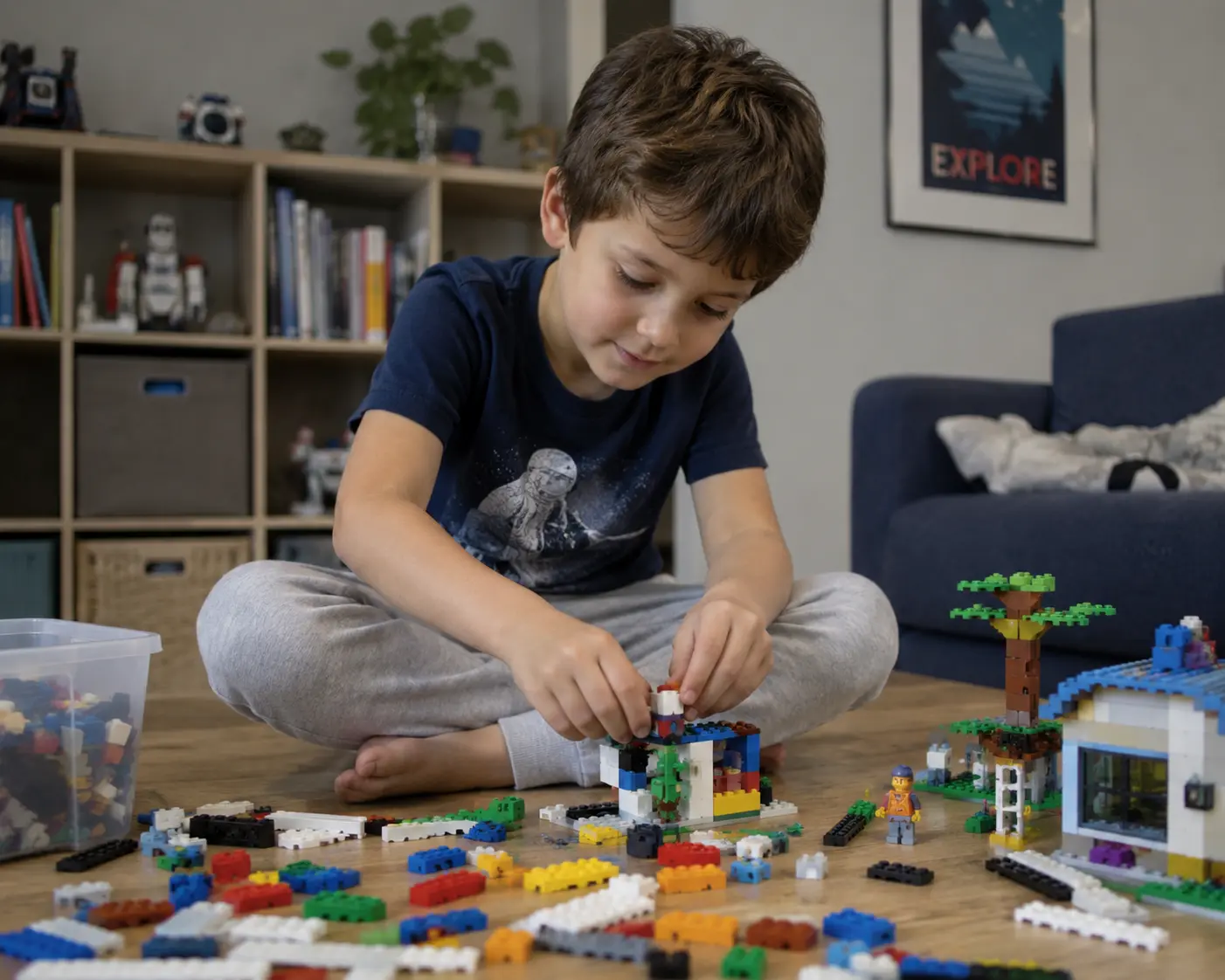
Embodied cognition theory offers a helpful lens here. This well-established framework proposes that the body actively shapes learning — that understanding lives not just in the mind but in movement, sensation, and physical handling of objects. As a result, when children build a scene from a story they are hearing, they are not simply “playing.” Instead, they anchor abstract language to concrete physical experience, which strengthens memory encoding and deepens conceptual retention.
The five characteristics of playful learning
The LEGO Foundation’s research identifies five characteristics of truly effective playful learning. The experience must be joyful, meaningful, actively engaging, iterative, and socially interactive. Storytelling through play — done well — meets all five. For example, a child who builds, shares, and retells a story with classmates practises literacy skills while also experiencing something joyful and collaborative. Furthermore, they refine their build through iteration and connect the narrative to personal meaning. Six Bricks Build-a-Book is specifically designed to meet all five characteristics within a structured, educator-guided session.
What Happens in the Brain When Children Build a Story
To appreciate why Build-a-Book works so well, it helps to look at what happens developmentally when a child moves between hearing a story and physically constructing part of it.
Working memory and narrative sequencing
Working memory is the brain’s ability to hold and use information in real time. It is one of the most critical cognitive skills in early childhood. Specifically, it lets a child follow a three-step instruction, recall what happened two pages ago in a story, or retell events in the correct order. Research consistently shows that working memory ranks among the strongest predictors of early academic outcomes, including reading and numeracy.
When children hear a page, pause, build the scene, and share their build before moving on, they actively exercise working memory across every transition. In other words, the “read, build, share, retell” structure of Build-a-Book is not simply an engagement technique. It is a working memory workout that educators weave directly into story time.
Language development through multi-sensory engagement
Multi-sensory learning — engaging touch, sight, and sound together — strengthens memory encoding. It also supports children who learn best through hands-on experience. In a Build-a-Book session, a child simultaneously hears new vocabulary, sees illustrations, places physical bricks, and talks with peers about what they have built. This multi-channel engagement means new words and narrative structures enter memory through multiple pathways at once. As a result, children find those words more durable and accessible later on.
Vocabulary development is one of the most powerful predictors of reading comprehension. For example, when children encounter the word “lonely” while building a scene — placing an animal alone on a mat — that word gains texture and meaning. A dictionary definition simply cannot provide the same anchor.
Vygotsky’s Zone of Proximal Development in storytelling
Vygotsky’s Zone of Proximal Development tells us that children grow most when gently stretched. They need challenges just beyond what they can do alone, combined with the right support. Build-a-Book naturally sits within each child’s ZPD. An educator reads and guides; a child builds their interpretation; the group shares and compares. The child feels capable — yet the session also pushes them to extend their language, reasoning, and narrative understanding. Moreover, as the Build-a-Book series progresses, the complexity of what children construct, retell, and discuss grows alongside them.
Build-a-Book in the Classroom: A Practical Snapshot
One of the most common questions educators ask about Build-a-Book is: how does this actually look in a real session? The answer is simpler — and more adaptable — than many expect.
A classroom story session, step by step
Imagine a Year 1 classroom. The educator introduces Cracker, the Lonely Crocodile — a Build-a-Book story about social connection and belonging. Each child has six DUPLO®-style bricks and a grid. The educator reads the first page aloud, slowly and expressively. Then she pauses.
“Show me where Cracker is right now. Build his world.”
The room fills with quiet concentration and the gentle click of bricks. One child puts a single brick in the centre of the grid. “He’s all alone,” she says. Another builds a cluster of bricks around a gap. “That’s everyone else — they left him out.” A third child, who rarely volunteers in whole-group discussions, leans in to show his neighbour his build and explains what each colour means.
After thirty seconds, the educator asks three children to share. New vocabulary — “isolated,” “left out,” “lonely” — is heard, repeated, and given context. Then the page turns. The cycle begins again.
This is storytelling through play at its most straightforward and most powerful. There is no preparation beyond reading the book. There is no marking or assessment pressure. And yet every child in that room has just practised working memory, vocabulary building, sequencing, inference, and collaborative language — in under five minutes of story time.
How Build-a-Book fits into your existing routine
Build-a-Book slots into whole-group story time, small-group reading rotations, and early intervention sessions. It follows a simple four-step rhythm: read a page, build the scene, share the build, retell the story. This structure requires minimal instruction. Furthermore, it creates a predictable routine that children quickly internalise. For children who benefit from clear expectations, that predictability also supports engagement and self-regulation.
The series currently includes four titles: Cracker, the Lonely Crocodile (social connection), Kito, the Bravest Kitten (courage and resilience), Diggy, the Helpful Dog (kindness and community), and Dimples, the Littlest Dinosaur (belonging and self-worth). Each story invites discussion and emotional vocabulary. As a result, Build-a-Book works as a natural fit for social-emotional learning alongside literacy development.
Build-a-Book and Inclusive Literacy Practice
Every early years classroom holds a wide range of learners. Some children are early in their English language development. Others work through speech and language differences, varying attention profiles, or simply learn best when their hands are moving. Notably, one of the most consistent pieces of feedback Six Bricks Learning receives from educators is that Build-a-Book reaches learners who previously found story time hard to access.
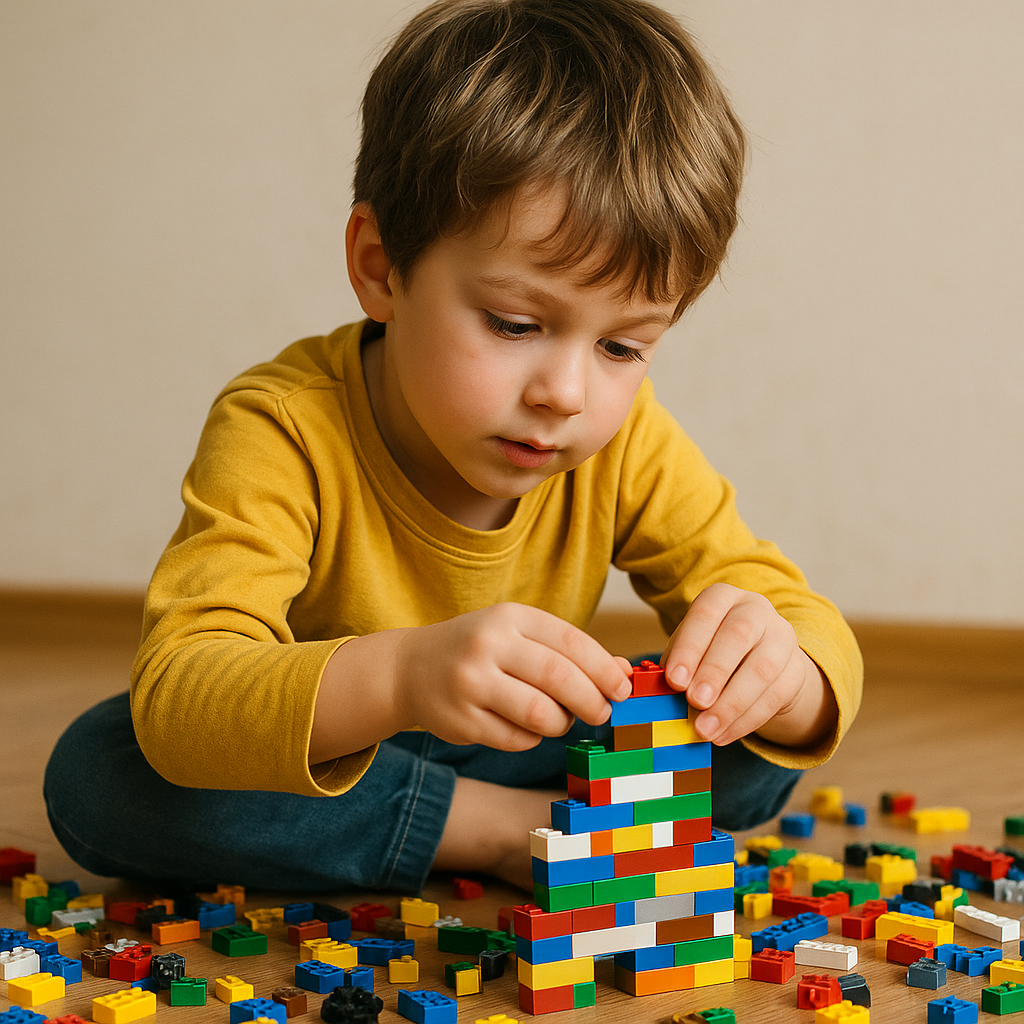
The reason is not complicated. When a child cannot yet decode print, cannot sit still for an extended listening session, or has not yet built confidence for whole-group discussion, the physical act of building offers an alternative entry point. The brick construction says: I understood. I was here. I made something from the story.
This is the multi-sensory, tactile nature of Six Bricks acting as an accessibility feature — not an adaptation for a specific group, but a design that simply works better for a much wider range of learners than passive listening alone.
Supporting low-verbal and emergent language learners
For children who are low-verbal or working through language delays, Build-a-Book offers a way to show comprehension without requiring verbal output. A child who builds an accurate scene from a story page has demonstrated understanding — regardless of whether they can yet put it into words. This matters enormously for inclusive assessment practice. Furthermore, it builds the confidence that eventually does lead to verbal participation.
For emergent bilingual learners, the concrete-to-language pathway of building-then-talking mirrors the kind of scaffolded language acquisition that developmental research consistently supports. New vocabulary appears in context, attaches to physical reference, and then reinforces through peer conversation — all within a single story session.
Key Takeaways
- Storytelling through play is grounded in developmental research — it engages working memory, multi-sensory processing, and embodied cognition simultaneously.
- Build-a-Book’s four-step structure (read, build, share, retell) is a practical, low-prep literacy routine that strengthens vocabulary, sequencing, and comprehension.
- The physical act of building gives every learner an entry point into the story — including children who are tactile learners, low-verbal, or emergent language users.
- The LEGO Foundation’s five characteristics of playful learning — joyful, meaningful, actively engaging, iterative, and socially interactive — are built into every Build-a-Book session.
- Build-a-Book integrates naturally into whole-group story time, small-group rotations, and early intervention — with no specialist training required.
- Each title in the Build-a-Book series pairs literacy development with social-emotional themes, making it a genuinely whole-child resource.
Frequently Asked Questions
What age group is Build-a-Book designed for?
How does storytelling through play help with reading comprehension?
Can I use Build-a-Book with children who already have bricks from a Six Bricks Group Kit?
How long does a Build-a-Book session take?
Is Build-a-Book suitable for children with language delays or speech differences?
Ready to bring storytelling through play into your classroom?
Explore the Build-a-Book series and find the story that’s right for your learners — each title is designed to build literacy skills and spark real conversation.
Explore Build-a-Book →