
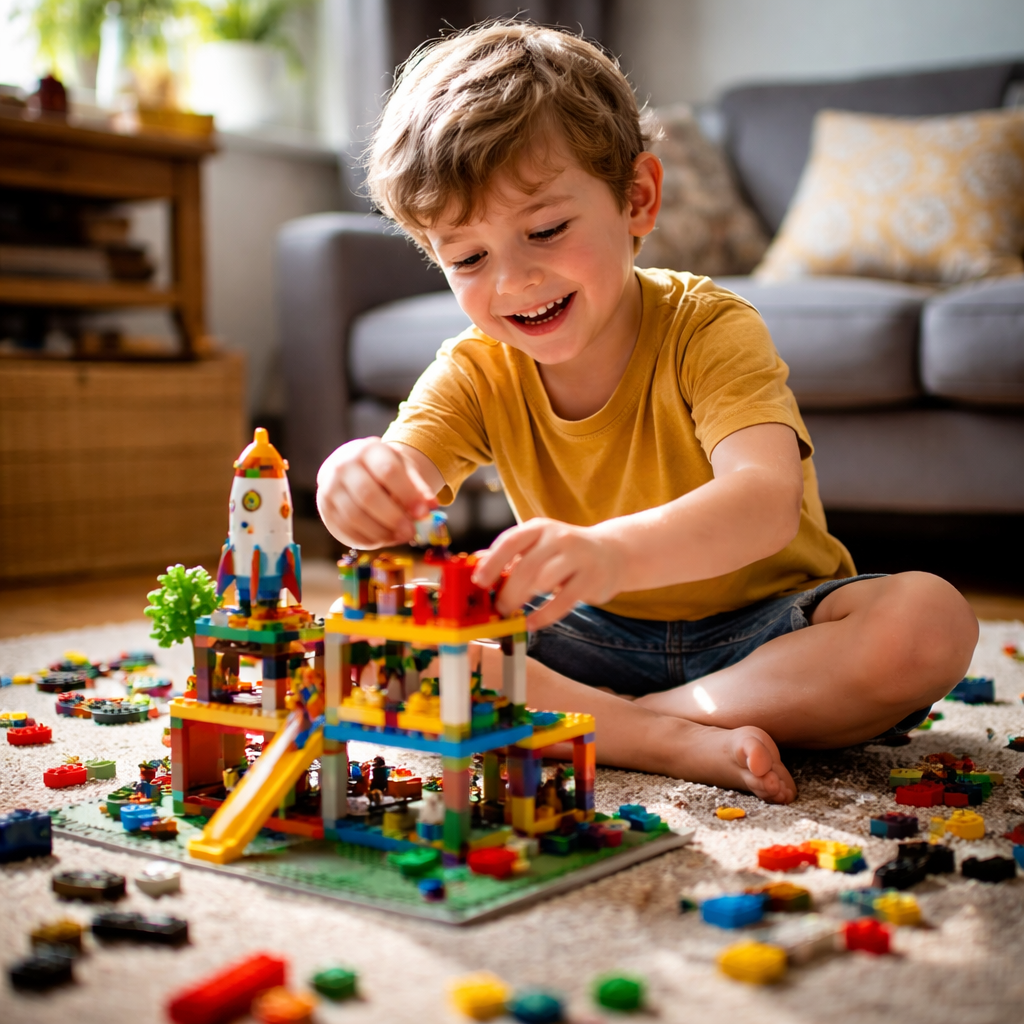
Is Play-Based Learning Effective?

It’s pick-up time, and a parent watches their four-year-old carefully sorting six colourful bricks into a pattern, chatting to a friend about which one goes where. It looks like play. To many parents, it doesn’t look like “school.” So they ask the question every early childhood educator has heard a hundred times: but when do they actually start learning?
New research suggests that question comes from a real and widespread gap — not between what’s true and what isn’t, but between what parents see and what’s actually happening in a child’s brain during play. A 2026 study from Ohio State University found that while the overwhelming majority of preschool teachers see play as a genuine academic strategy, many parents still associate real learning with worksheets, flashcards, and direct instruction. That gap matters, because when parents don’t trust play-based learning, they can unintentionally push centres and schools toward less effective, less developmentally appropriate practice.
Quick Overview
- Who is this for? Parents of preschool and early primary children, and educators who want better ways to explain play-based learning to families.
- What will you learn? What new research says about the parent–teacher perception gap, the skills play actually builds, and how to recognise genuine learning happening in front of you.
- Key takeaway: Structured play isn’t a break from learning — it is the learning, and there are concrete signs you can look for.
What Does “Learning Through Play” Actually Mean?
Learning through play means a child builds academic, cognitive, and social skills through active, hands-on engagement rather than passive instruction — with an adult intentionally guiding the experience toward a developmental goal.
This is different from purely unstructured free play, and it’s different from a worksheet. It sits in the middle: child-led enough to stay joyful and motivating, structured enough that specific skills are being built on purpose.
- Child-directed enough to stay engaging and motivating
- Guided by an adult toward a specific, nameable skill
- Repeatable, so the same skill is practised more than once
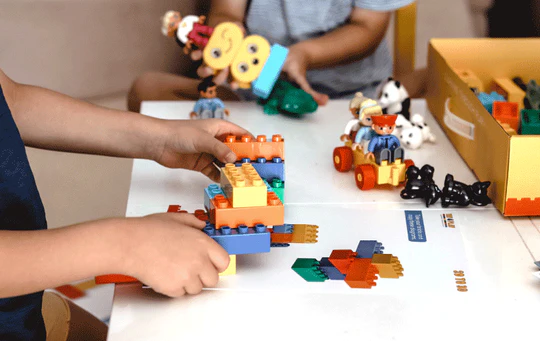
What New Research Reveals About the Parent–Teacher Gap
Here’s the direct answer: teachers overwhelmingly believe play supports academic learning, but many parents still don’t — and that mismatch is measurable, not just anecdotal.
The Ohio State-led study, published in the Early Childhood Education Journal, surveyed 110 preschool teachers across two Midwestern states. Lead researcher Erin Fox and colleagues (including Kelly Purtell of Ohio State, and researchers from the University of Illinois Chicago, the University of Nebraska–Lincoln, and the University of North Carolina Greensboro) found that 96.9% of teachers agreed that play supports academic learning. Interestingly, the study also found a geographic pattern: teachers in urban settings reported significantly less family support for play-based approaches than their suburban counterparts.
A Shared Word, Two Different Meanings
According to Fox, “one of the biggest misconceptions is that play doesn’t support learning.” Parents in the study tended to recognise play’s social and emotional value readily — but were far more likely to underestimate its role in building literacy and numeracy skills specifically. This isn’t a story about parents being wrong to care about school readiness. It’s a story about two groups using the word “learning” to mean different things, and needing a shared, visible way to talk about it.
The Skills Play Builds That Aren’t Always Visible
A lot of the most important learning happening during play is invisible if you don’t know what to look for. Educational researchers group these skills into five developmental domains: cognitive, social, emotional, physical, and language — and structured play activities are designed to move several of these forward at once.
The most consequential of these, according to a growing body of educational research, are the three executive function skills:
- Working memory — holding and using information, like remembering the steps of a game while playing it.
- Cognitive flexibility — adjusting to a new rule, a new pattern, or an unexpected turn.
- Inhibitory control — pausing before reacting, waiting a turn, or resisting an easier but “wrong” answer.
Research consistently shows that executive function is one of the strongest predictors of school readiness — in some analyses, a stronger predictor than IQ alone. Spatial reasoning is part of this same invisible curriculum: research indicates that a child’s spatial ability at age four is one of the strongest predictors of their mathematical ability at age eight. None of this looks like “school.” All of it is school.
How to Spot Real Learning Happening During Play
The clearest way to close the parent–teacher gap is to give parents a concrete way to see what a teacher already sees. Here’s a simple comparison to use with families:
| What it might look like | What’s actually developing |
|---|---|
| Sorting bricks by colour | Categorisation, early maths thinking |
| Copying a brick pattern from a card | Working memory, sequencing |
| Waiting for a turn in a small group | Inhibitory control, self-regulation |
| Retelling a story using bricks as characters | Language development, narrative structure |
| Building something new after a rule changes | Cognitive flexibility, problem-solving |
Signs that structured play is working as intended:
- The activity has a clear, simple goal an adult can name.
- The child is engaged and enjoying it — not just compliant.
- The same core skill reappears across multiple activities, not just once.
- An educator can tell you, specifically, what the activity was building.
If an educator can answer “what was my child practising just now?” with a specific skill rather than a general “they were just playing,” that’s a strong sign the play was structured and intentional — the kind Six Bricks activities are purpose-built to deliver in five-minute sessions.
For Educators: How to Talk to Families About Play-Based Learning
Imagine a Pre-K classroom where, at pick-up, a teacher hands each parent a small card: “Today we practised inhibitory control — we call it ‘stop and think.’ Ask your child to show you the brick game we played.” It takes ten seconds, and it directly answers the question every parent is quietly asking.
Practical strategies for bridging the gap:
- Name the skill, not just the activity, when you communicate with families.
- Send home a simple take-home version of the day’s activity (Six Bricks’ Play&Learn resources are designed exactly for this).
- Use the same five developmental domains consistently, so families start to recognise the pattern over time.
- Invite parents to try a two-minute activity themselves during pick-up or a family evening — direct experience closes the gap faster than any explanation.
Key Takeaways
- A 2026 Ohio State-led study found 96.9% of preschool teachers believe play supports academic learning — but many parents remain unconvinced, especially in urban communities.
- The gap isn’t about parents being wrong to care about school readiness; it’s about learning to see skill-building that isn’t labelled as “academic.”
- Executive function — working memory, cognitive flexibility, and inhibitory control — is one of the strongest predictors of school readiness, and it’s built through structured play.
- Spatial reasoning at age four is one of the strongest known predictors of maths ability at age eight.
- Naming the specific skill behind an activity — not just describing the activity — is the single most effective way to help families see the learning.
- Structured, five-minute play routines like Six Bricks activities make invisible learning visible, at school and at home.
FAQ
Is play-based learning as effective as direct instruction for preschoolers?
Why do some parents think play-based learning isn’t “real” school?
How can I tell if my child is actually learning during play at home?
What is executive function, and why does it matter for school readiness?
How can educators help parents understand play-based learning?
Help Families See the Learning
Explore Six Bricks’ Play&Learn resources to bring structured, take-home activities into your classroom communication — or book a free introductory webinar to see the method in action.
Explore Play&Learn Resources